Why This Matters Before You Break Ground
Plumbing is one of the largest mechanical line items in any new build, and it is also one of the least visible; by the time you move in, nearly everything you paid for is buried under a slab or sealed inside walls. That combination makes plumbing the budget item where owners most often get surprised, either by a bid that balloons through change orders or by discovering during framing that the "cheap" bid excluded half the scope. Whether you are an owner-builder putting up a custom home outside Hollister, a family adding an accessory dwelling unit, or a builder pricing a spec project in one of San Benito County's growing subdivisions, understanding how plumbing contractors actually build their numbers puts you in control of the conversation. This guide explains what goes into the price, phase by phase, from a contractor that bids this work every week across the Central Coast.
Who Is Buying: Owner-Builder Versus General Contractor
How you buy plumbing affects what you pay and what you need to watch. If a general contractor is running your project, the plumbing arrives inside the GC's bid as a subcontractor line, and your leverage is at the front end: ask who the plumbing sub is, whether they are licensed and insured, and whether the fixture allowances in the contract reflect what you actually intend to install. A generous-sounding allowance built on builder-grade trim becomes a change order the day you pick the fixtures you really want. If you are an owner-builder, you are the general contractor, and the plumbing bid lands on your desk directly. That gives you full visibility and full responsibility: you coordinate the plumbing phases against your foundation, framing, and drywall dates, you confirm the permit is pulled and inspections are scheduled, and you carry the schedule risk if a phase slips. Either way, the fundamentals below are identical: the same three phases, the same cost drivers, the same red flags. Understanding them is what turns you from a price-taker into an informed buyer on the single most water-damage-prone system in your build.
The Three Phases That Make Up the Price
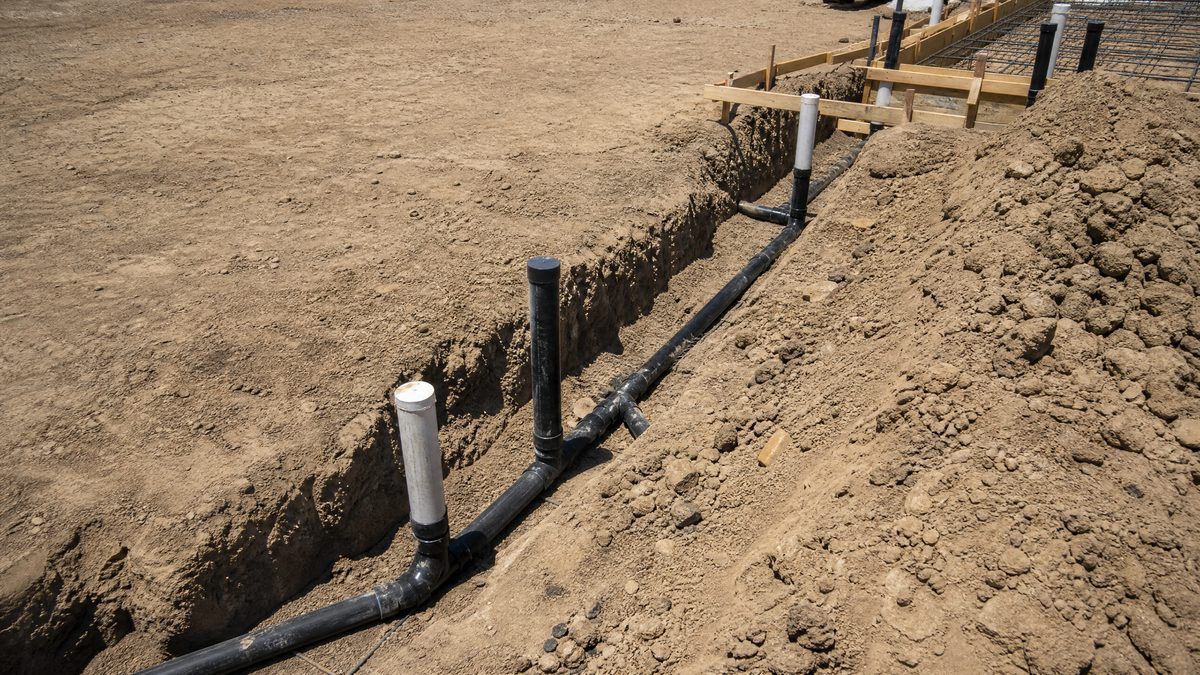
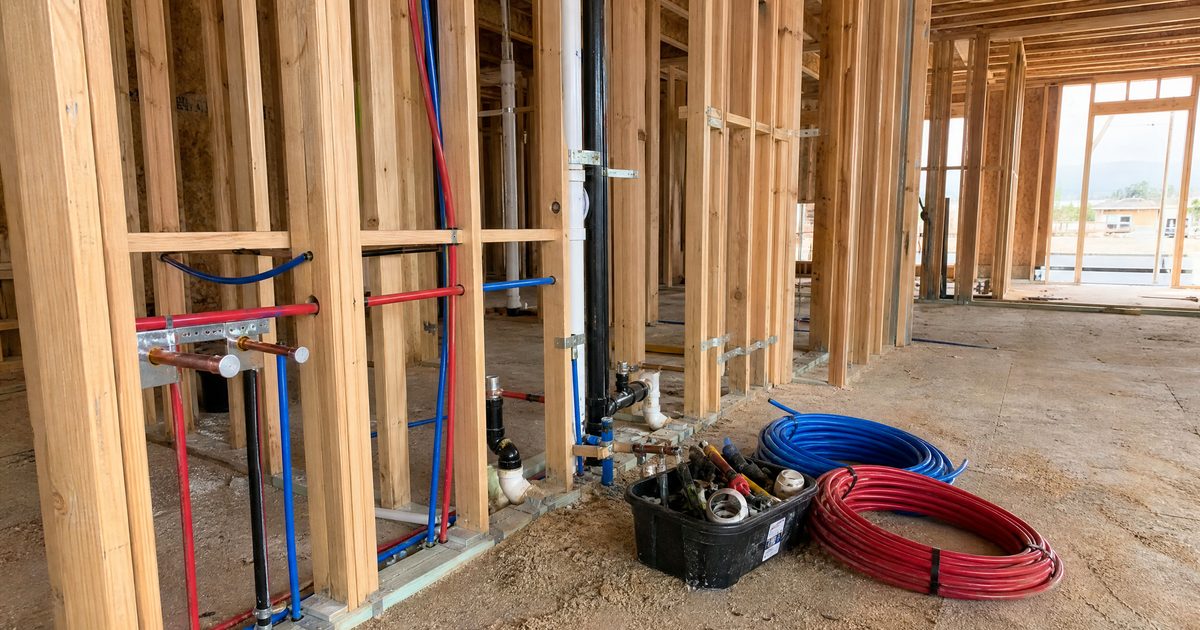
Every new construction plumbing bid covers three distinct phases of work, and understanding them explains where the money goes. The first is underground rough-in: trenching and installing the sewer, water, and gas lines that run beneath the foundation, plus the drain-waste lines that must be placed, sloped, pressure-tested, and inspected before any concrete pours. This phase carries excavation equipment costs, and it is unforgiving; a mistake under the slab is a jackhammer problem later. The second phase is top-out: once framing stands, crews run the supply lines, drain-waste-vent stacks, and gas piping through walls and ceilings, then strap, protect, and test everything for the rough inspection. Top-out is where fixture count really drives labor hours, because every bathroom, laundry connection, and hose bib adds runs. The third phase is trim-out: after drywall and finishes, plumbers return to set fixtures, connect the water heater and appliances, install stops and supply lines, and test every connection under pressure before the final inspection. Trim is where fixture specification shows up; setting a standard faucet and setting a freestanding tub filler with a floor-mounted rough valve are very different line items.
The Five Cost Drivers, Ranked
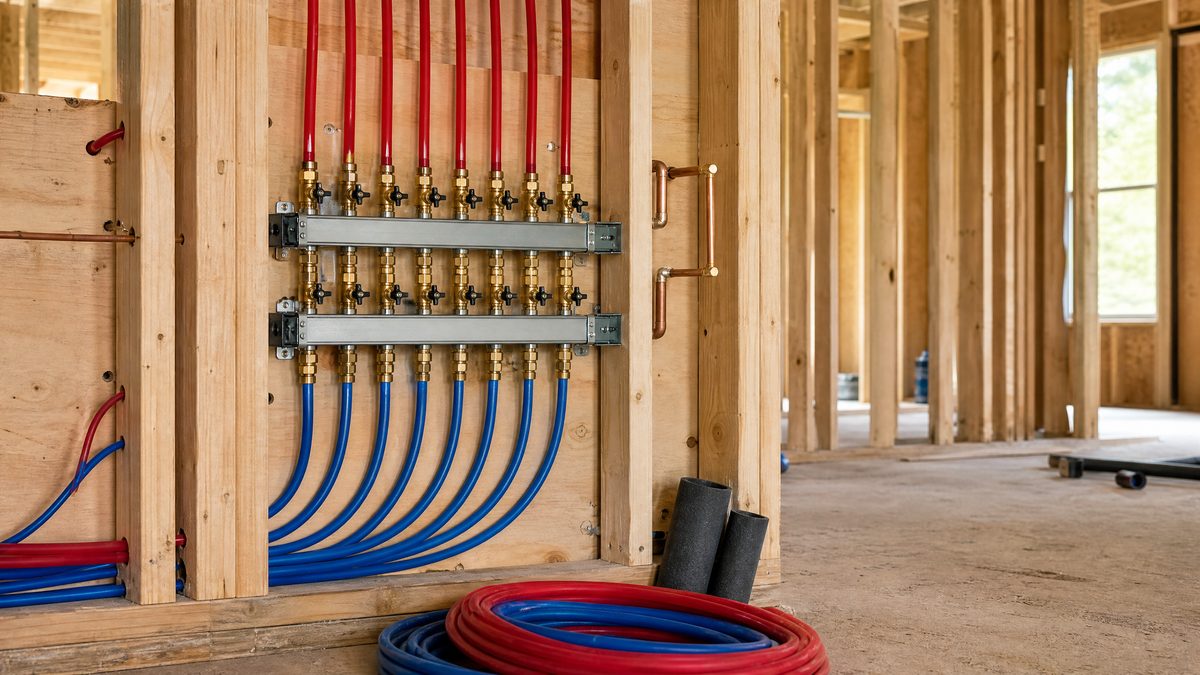
Fixture count matters most. Plumbers price largely per fixture, because each one represents supply runs, drainage, venting, and trim labor. A two-bath house and a four-bath house of identical square footage carry very different plumbing budgets. Layout comes second: bathrooms stacked near each other and close to the kitchen share walls and drain runs, while bathrooms scattered to the far corners of a sprawling single-story plan need long individual runs of pipe and labor. Third is the utility picture: how far the home sits from the water meter, sewer main or septic system, and gas connection. Rural properties around Hollister and San Juan Bautista often need long service runs and, on well systems, pressure tanks and treatment equipment that municipal lots never think about. Fourth is specification level: quarter-turn valves, recirculation loops, tankless water heaters, water softener loops, and premium fixtures all raise the number, and all of them are dramatically cheaper to install during construction than to retrofit later. Fifth is site conditions: the expansive clay soils common across the Hollister basin demand proper trench bedding and compaction, and rocky or sloped lots slow excavation.
A Realistic Budget Walkthrough, Phase by Phase
To make the structure concrete, walk through how the budget distributes on a typical single-family build in the Hollister area. The underground phase generally represents roughly a fifth to a quarter of the plumbing budget: it carries the excavation equipment time, the sewer and water service runs from the street or well, gas line trenching, and the sub-slab drainage that must pass inspection before concrete. Long utility runs on rural lots push this share higher, sometimes dramatically, when a well system or a long gas run is involved. Top-out is usually the largest phase, often approaching half the budget, because it carries the majority of material and labor hours: every supply run, every drain and vent stack, gas piping to each appliance, and the testing and inspection time that goes with it. Trim-out covers most of the remainder, and its share swings the most with specification: builder-grade trim keeps it lean, while premium fixture packages, freestanding tubs, and multi-head showers expand both the material and the labor lines. Sitting across all three phases are the equipment items (the water heater and any treatment or recirculation systems) and the soft costs: permit fees, inspection coordination, and mobilization. When a bid deviates wildly from this rough shape, whether an underground number that looks too thin for your lot or a trim line that ignores your fixture schedule, that deviation is exactly where to ask questions before you sign.
How to Read and Compare Plumbing Bids
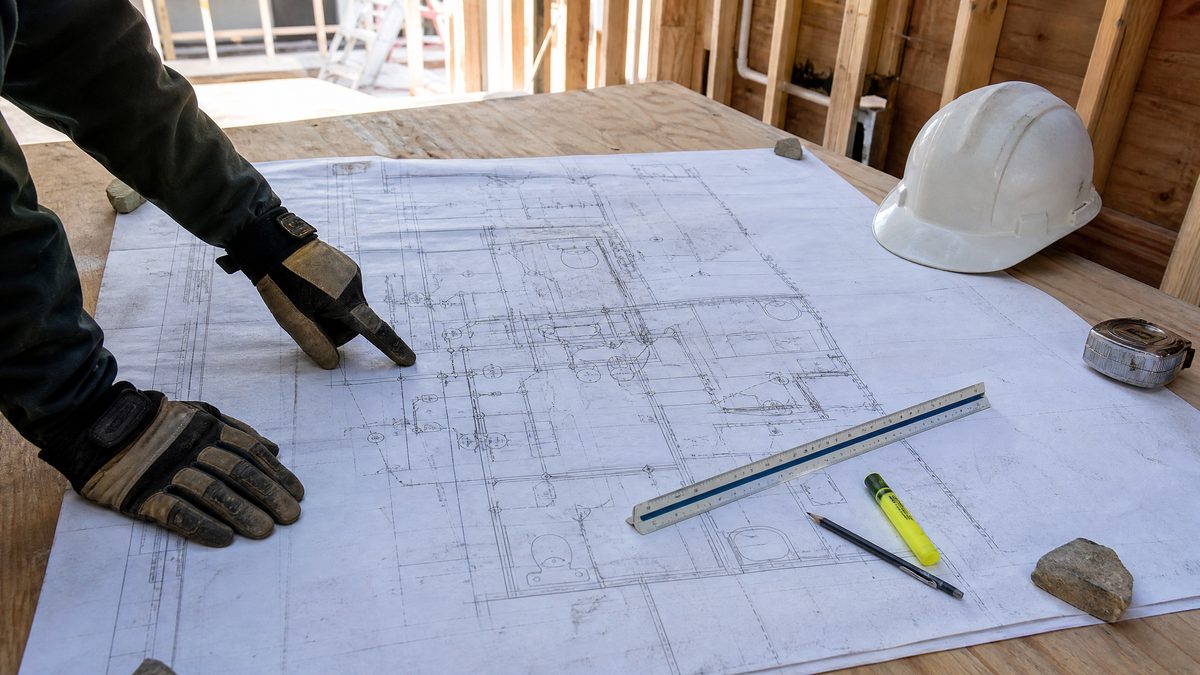
A professional bid is built from a takeoff: the contractor counts every fixture on your plan set, measures the runs, prices the equipment schedule, and itemizes the phases. When you get bids, compare them at the line level, not the bottom line. Check that each bid includes all three phases, the water heater and its code items, hose bibs, the gas line scope, permit coordination, and inspection time. The most common games in a low bid are excluded fixtures ("owner supplies all trim"), missing gas lines, no water heater, and an allowance structure that guarantees change orders. Ask every bidder the same three questions: What is excluded from this number? Who pulls the plumbing permit? And is inspection coordination included? A contractor who answers those cleanly and puts it in writing is bidding to build, not bidding to win and change-order. At DAE Plumbing our estimates are free and itemized precisely so owners and general contractors can compare line by line. We would rather lose a bid honestly than win one that surprises you in month two.
Where Hollister Builds Differ From Elsewhere
Local conditions shape the scope in ways out-of-area estimates miss. Hollister basin water is hard enough that many builders now rough in a water treatment loop during construction as standard practice: a small line item at build time that saves a much larger retrofit later and protects every fixture and appliance downstream from day one. Expansive clay soils across San Benito County make trench bedding and compaction quality a durability issue, not a nicety; underground lines that settle crack, and cracked drains under slabs are among the most expensive repairs in residential plumbing. Seismic code shapes water heater installation and favors flexible connections. And each jurisdiction (the City of Hollister, San Benito County, and the neighboring counties we build in) runs its own plan check and inspection rhythm, which affects schedule more than cost but matters to both. A contractor who works with these building departments weekly prices the real process, not a generic one.
When to Bring the Plumber In
The right answer is: at the plan stage, before ground breaks. Early involvement lets the plumbing contractor flag design issues while they are still eraser problems instead of jackhammer problems: a bathroom group that cannot vent properly, a water heater location with no code-compliant venting path, an island sink with no drainage plan. It also locks your place in the contractor's schedule so the underground phase is ready when your foundation date arrives, and it gives your budget a real number instead of a guess. DIY has almost no place in new construction plumbing: this work is permitted, inspected at every phase, and consequential for decades. What an owner-builder can do is manage the process well: get complete bids early, compare them line by line, and hire a licensed contractor whose work passes inspection the first time.
Need a Plumber in Hollister? DAE Plumbing Is Ready to Help
DAE Plumbing installs complete plumbing systems for new homes, custom builds, and commercial projects across Hollister, San Benito County, and the Central Coast. We are licensed (CA #1047507), bonded, insured, and equipped with our own excavation fleet for the underground phase. Send us your plan set for a free, itemized takeoff. Call us at (831) 801-1079 or contact us today to price your build in Hollister and surrounding areas.